
Nobody ever comes back from this trip wishing they’d left Slovenia out. The complaint runs the other way. Too many people cut it short, or skip it entirely, because they could not figure out the logistics of crossing from one country into another with a set schedule and no clear sense of who was coordinating the pieces.
That specific problem is exactly what a private guide solves. But the more interesting question first: what do these two countries actually give you when you stack them into one trip, and is it worth doing?
The answer is yes, with one condition. You need to know which version of the trip you’re building before you start booking.
Quick Answer: Combining Croatia and Slovenia is worth it. Four to six days gets you Zagreb, Ljubljana, and Lake Bled. That’s the inland version of the trip. For the full thing with the Dalmatian Coast in front of it, you need closer to eleven days. A private guide is what keeps the two-country logistics from becoming your problem. They manage what changes at the border, who is driving each leg, and what happens when the schedule needs adjusting. The 11-day private package starts from roughly 3,100 USD. Both countries are Schengen, though Slovenia has maintained random targeted border checks into 2026.
Two Trip Shapes, Not Ten
Strip this trip down and you get two realistic options. Everything else is variation on one of them.
The Short Format: Zagreb, Ljubljana, and Lake Bled in 4 to 6 Days
Zagreb is a better city than its reputation suggests, probably because Dubrovnik and Split absorb all the attention. What you find there: an old town that still functions as a neighborhood rather than a backdrop. Dolac market runs daily, outdoor produce in the morning and a covered hall year-round, and it operates at the pace of people who are actually buying groceries rather than photographing them. The food leans Croatian in a way the coast sometimes stops doing once tourist volume gets high enough. It does not need more than a full day. Sometimes two, if you’re slow-paced or genuinely interested in Croatian history. One day is usually enough.
From Zagreb, Ljubljana is about 2 hours by road. When you get there, you don’t feel like you’ve been traveling all day. But you also know you’ve moved somewhere that is clearly not Croatia. The city has a castle on a hill that’s perfectly skippable if you’ve already done one fortified old town in the region. The riverside district is not skippable. It’s the kind of pedestrian street level that a certain type of European city does extremely well, and Ljubljana does it better than most. The whole relevant area is walkable in an afternoon.
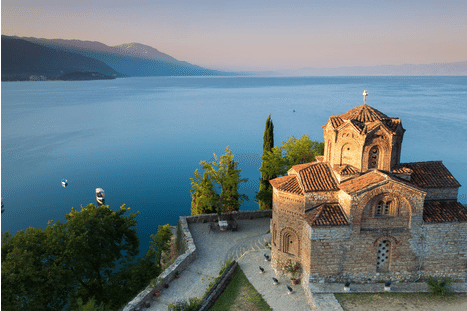
Lake Bled is 45 minutes from Ljubljana, so it fits into the same day or its own focused morning. The island in the middle of the lake is real. It is not a postcard manipulation. There’s a church on it and a wooden boat to get there and the whole scene looks almost implausibly photogenic in person, not just in photographs. If anyone in the group prefers walking to boating, trails run around the lake perimeter.
Four days is the floor. Six gives you room to actually stop and look at things. Most people end up somewhere in between and wish in retrospect they’d taken the six.
The Full Format: Dalmatian Coast Plus Slovenia in About 11 Days
This is a different animal entirely in terms of tone. You start in Dubrovnik or Split, work your way north along the coast, cut inland through Plitvice Lakes, move through Zagreb, and cross into Slovenia for the final three or four days.
What makes this sequence work is the emotional arc. The coast is visually intense, social, warm, and full of other tourists. By the time you get to Slovenia, you’ve had enough of that, and the quieter pace of Ljubljana and the mountains lands differently than it would at the beginning of a trip. The order matters more than it seems when you’re planning it.
For the full version, eleven days is a realistic minimum. Ten works if you cut one coastal stop. Twelve is comfortable. Anything longer and you’re either going very deep into Triglav National Park (worth it if the outdoors is the point) or repeating yourself on the coast.
Which Shape Fits Your Trip?
| Factor | Short Format (4 to 6 Days) | Full Format (Around 11 Days) |
|---|---|---|
| Where you start | Zagreb | Dubrovnik or Split |
| Main stops | Zagreb, Ljubljana, Lake Bled | Coast, Plitvice, Zagreb, Ljubljana, Bled |
| What you miss | The coast entirely | Not much |
| Starting price | Lower (fewer days) | From ~3,100 USD private |
| Pacing pressure | Low to moderate | Moderate |
| Best for | Limited time, first visit | Anyone with 10 or more days |
What Plitvice Lakes Does to the Itinerary
Here is the geographic coincidence that makes Plitvice worth including on the full version: the park sits almost exactly between Split and Zagreb on the route north. This is not the reason to go there. The waterfalls are the reason. But the location means you are not making a separate detour. You are stopping somewhere that was already on your path.
Wooden walkways run directly above the water through most of the park. The lower lakes circuit takes around two hours at an easy pace. Adding the upper section brings it to a half day. There is a shuttle and a boat inside the park that most people use even though the distances are not large. The photography is easy. The walking is not strenuous. As a mid-drive stop on a transition day between the coast and Zagreb, it fits without feeling forced.
Go early. The park caps daily visitors and morning entry fills first. Your guide pre-books tickets, which prevents an annoying morning at the gate.
What Happens at the Croatia-Slovenia Border (and What Your Guide Takes Off Your Plate)
Here’s what the planning documents don’t always make clear: the Croatia-Slovenia crossing dropped its traditional passport booth when both countries joined Schengen. Under the standard arrangement, you drive across without stopping. No queue, no booth, no stamp.
But Slovenia has maintained random targeted spot checks at the Croatian border into 2026, extended at least through June of that year. These are not full passport control stations. Police stop specific vehicles based on factors like vehicle type or route patterns. If your vehicle gets waved over, you show documents and you’re moving again in a few minutes. For most tourists traveling by private car with a guide, this is genuinely not a problem.
The value of the guide at the border is not speed. It’s certainty. A guide who crosses this route regularly knows what to expect, knows which documents to keep accessible, and handles any moment of unexpected friction without it becoming your problem. They also communicate in the local language if anything needs clarifying on the spot.
The second thing your guide handles in a combined itinerary is what I’d call the driver handoff problem. On a cross-border trip of this length, you’ll likely have different drivers handling different local segments. The guide travels with you for all of it. When a driver changes, your guide doesn’t. They carry context forward: your pace preferences, the things you mentioned wanting more time at, any access requirements. You don’t re-explain yourself every day to someone new. Over 11 days and two countries, that difference adds up faster than you’d expect.
Split to Ljubljana is not a short transfer. Figure 4.5 hours at best, probably closer to 5 depending on traffic around Rijeka. Drop Plitvice into the middle of that and you’re looking at a full day in motion. Which is not a complaint. You’re crossing between countries and a national park happens to sit almost exactly at the halfway point. There are worse ways to structure a travel day.
Key Takeaways
- Combining Croatia and Slovenia makes geographic sense. The route from the Dalmatian Coast to Lake Bled is continuous, not a side trip.
- Four to six days covers Zagreb, Ljubljana, and Lake Bled. Eleven days covers the full route including the coast.
- Plitvice Lakes is a natural mid-route stop between Split and the Slovenian border, not a dedicated day trip.
- Both countries are in the Schengen zone. Slovenia has run random targeted border checks into 2026, which take a few minutes for most private travelers.
- A private guide provides continuity when drivers and local arrangements change across the border. This is their primary value on a combined trip, alongside local knowledge.
- The 11-day private package starts from around 3,100 USD. Shorter itineraries cost less. Larger groups reduce the per-person rate.
Frequently Asked Questions
Do I need a visa for both Croatia and Slovenia?
No. Both countries are in the Schengen zone. Citizens of the US, Canada, UK, Australia, and most other Western countries can travel between them without a visa for up to 90 days within any 180-day period. If your passport is from a country outside the standard Schengen visa-free list, check the current requirements for your nationality before booking. The rules can change without much notice.
Is there actually a passport check at the Croatia-Slovenia border?
Not a formal fixed-station check. Slovenia has maintained random targeted spot checks since late 2023, extended through at least June 2026. Police stop specific vehicles based on their own criteria; they are not stopping every car in the lane. If your vehicle gets flagged, you show your passport and you’re through in a few minutes. For private tour travelers, this is not a meaningful obstacle.
Can I realistically do both countries in a week?
Yes, but only if you commit to the short format upfront. A week covers Zagreb, Ljubljana, and Lake Bled with some actual breathing room between stops. What a week cannot cover is the Dalmatian Coast plus Slovenia. Those two combined require 10 days at an absolute minimum, and 11 is more realistic.
If you’re genuinely torn between a coast trip and a Slovenia trip on a 7-day budget, the honest advice is to pick one. A lot of people do Croatia’s coast first, then add Slovenia on a separate trip. That’s a perfectly reasonable approach rather than a compromise.
How long is the drive from Split to Ljubljana?
Roughly 4.5 to 5 hours direct. With a Plitvice Lakes stop added in, expect a full driving day of around 8 to 9 hours total, depending on how long you spend in the park. Most private itineraries frame this as a transition day with Plitvice as a scheduled mid-point rather than a rushed extra stop, which is the right framing. You’re moving between countries. A world-class national park happens to be in the middle of the drive.
Does my private guide travel with me through both countries?
Yes. The guide stays with you for the full itinerary regardless of which country you’re in on a given day. What sometimes changes between countries is the driver handling local transportation segments. Your guide doesn’t change. They carry your pace preferences and context from one leg to the next so you’re not re-briefing a new person at every handoff. On an 11-day combined itinerary, this continuity is not a minor convenience. It’s what holds the trip together.
What’s Plitvice Lakes actually like in person?
Sixteen interconnected lakes at different elevations, connected by waterfalls, with wooden boardwalks running directly over the water. It looks like something designed for a travel brochure because the photographs look almost too perfect, but it genuinely looks that way in person. The lower lakes circuit takes around two hours at a relaxed pace. The upper section adds another two hours if you want it. A shuttle and a small boat operate inside the park. Tickets need to be pre-booked from June through September, and your guide handles that so you’re not arriving to a sold-out morning.
What’s the real argument for private over group on this route?
Pacing control. On a group tour, the itinerary runs on the group’s schedule, not yours. If the group moves on from Lake Bled after 90 minutes and you want three hours, you leave after 90 minutes. On a cross-border itinerary covering 11 days and two countries, the compounding effect of that constraint becomes significant. How long you spend at Plitvice. Whether you have a free afternoon in Ljubljana or you’re already on a transfer. Whether the border crossing adds friction on a particular day and your schedule can absorb it.
On a private tour, those decisions belong to you and your guide. The guide knows the route, knows which stops absorb more time than the plan assumed, and knows where to recover time if something runs long. On a group tour, nobody is making those calls on your behalf.
What’s included in the 11-day private tour package?
The standard 11-day Croatia and Slovenia private tour covers Dubrovnik, Split, island stops along the Dalmatian Coast (one or two depending on the route variant), Plitvice Lakes, Zagreb, Ljubljana, and Lake Bled. Private transport throughout, a dedicated guide for the full trip, accommodation at 3 to 4 star level, and entry fees for major sites are all included. Flights, meals, and personal expenses are not. The package starts from around 3,100 USD per person, with the per-person rate decreasing for larger groups. Current availability and full itinerary details are on the Croatia private tours and Slovenia private tours pages.
How to Start Planning
The logistics of a combined Croatia-Slovenia trip look complicated when you’re first mapping them out. In practice, the route is linear. You start somewhere, you move in one direction, and you finish somewhere else. A private guide covers the operational layer along the way: driver coordination, border logistics, ticket pre-booking, hotel check-in timing, and the daily pacing decisions that don’t have easy answers before you’re actually there.
If you’re starting from the coast, the Dubrovnik highlights guide covers the southern leg in more detail. For context on the wider regional trip and what combining multiple countries looks like logistically, the Balkan private tour planning guide is useful background reading. Full tour options across both countries are listed on the Croatia tours and Slovenia tours pages. For anyone considering a wider Balkan itinerary, Balkan private tours covers the multi-country options. Hotel choices for both legs are on the Croatia hotels and Slovenia hotels pages if you want to compare properties before committing to a package.
ABOUT THE AUTHOR
Jordan, Owner & Lead Trip Planner
Jordan has spent 20+ years arranging private tours across Turkey and the wider Mediterranean, and personally plans each All Private Tours itinerary. All Private Tours is TURSAB licensed (A-6257) and an ASTA member.