
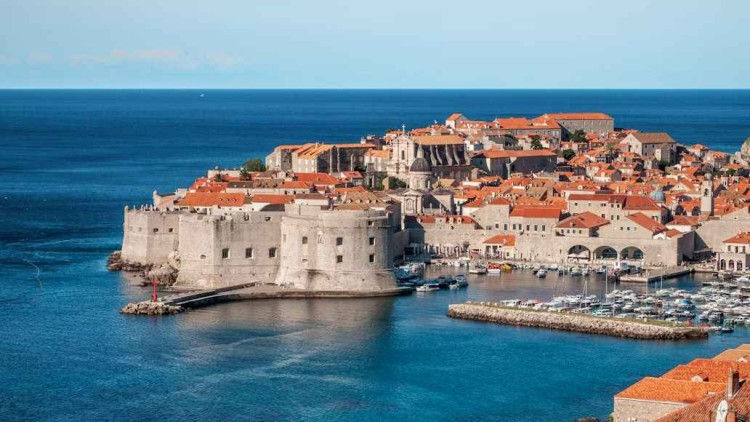
“The Balkans” isn’t one country, and most people planning their first trip don’t realize how many are usually on the table. All Private Tours’ own six-country Balkan package covers Slovenia, Croatia, Bosnia and Herzegovina, Montenegro, Albania, and North Macedonia, and that’s before anyone adds Serbia to the conversation. Trying to fit all six into a normal vacation is how a lot of first-draft itineraries fall apart around day nine. This guide breaks down which combinations actually work together, how long each one genuinely needs, and what a local guide or private driver is doing for you at every border you cross.
Which Balkan Countries Actually Combine Well
Geography decides this more than preference does. Croatia, Bosnia and Herzegovina, Montenegro, and Albania sit in a rough line down the Adriatic coast, which makes them a natural road route. Slovenia sits just north of Croatia and pairs easily with it without adding a third country. North Macedonia and Serbia sit further inland, so adding either one means real driving time, not a quick detour.
Croatia and Montenegro. The simplest, most requested pairing. Dubrovnik’s Old Town on one end, the Bay of Kotor on the other, connected by a coastal drive most travelers describe as one of the best legs of the whole trip. This is the version to book for a first Balkan trip if logistics stress you out. See our private Croatia tours and private Montenegro tours for what each leg looks like on its own.
Croatia, Bosnia and Herzegovina, and Montenegro. The classic three-country route, and the one most travel guides mean when they say “Balkan itinerary.” It adds Mostar’s Ottoman old town and the Stari Most bridge between the coastal stops, and it’s the combination that gives you the widest mix of history in the fewest extra days. Our private Bosnia and Herzegovina tours cover how Mostar and Sarajevo fit into this route.
Slovenia and Croatia. A northern pairing that skips the coastal countries entirely in favor of Lake Bled, Ljubljana, and Plitvice Lakes National Park before dropping down to Dubrovnik or Split. Both countries are in the EU and Schengen, so there’s no border check between them at all, just a road sign.
The full six-country route. Slovenia through North Macedonia in one continuous trip. It’s genuinely the most complete way to see the region, but it’s built for return visitors or travelers with three-plus weeks, not a first two-week vacation. Trying to compress it into 10 days turns every stop into a photo-and-drive.
How Many Days You Actually Need
All Private Tours’ own guidance for a multi-country Balkan route lines up with what most independent trip reports say too: usually spread across about ten days or more, which keeps the driving between stops relaxed and leaves time to slow down. Ten days is the floor for three countries, not the target to squeeze everything into.
| Combination | Countries | Recommended Duration | Best For |
|---|---|---|---|
| Croatia + Montenegro | 2 | 7-8 days | First Balkan trip, simplest logistics |
| Slovenia + Croatia | 2 | 8-9 days | Plitvice and the Adriatic, no extra border stress |
| Croatia + Bosnia & Herzegovina + Montenegro | 3 | 9-11 days | History plus coast, the classic route |
| Add Albania | 4 | 12-14 days | Travelers with two full weeks who want the coast to keep going |
| Full six-country route | 6 | 16-18+ days | Return visitors, deep dives, no rush |
What a Local Guide Actually Handles on a Multi-Country Balkan Tour
The value of a private guide or driver on this specific route isn’t mainly about commentary, it’s about the logistics that trip up independent travelers who’ve never crossed this many borders in one trip before.
Border paperwork and the EU Entry/Exit System. The EU’s new Entry/Exit System went fully live across Schengen borders on April 10, 2026, which matters here because Croatia and Slovenia are both in Schengen while Bosnia, Montenegro, Albania, and North Macedonia are not. That means your first entry into Croatia or Slovenia now includes a biometric fingerprint and photo scan for non-EU passport holders, adding a few minutes at that specific crossing. It doesn’t affect the non-Schengen crossings between Bosnia, Montenegro, and Albania at all. A guide who crosses these borders regularly knows which checkpoint this actually slows down and times the day around it instead of guessing.
Currency changes at nearly every border. Croatia and Slovenia both use the Euro, and Montenegro uses the Euro too despite not being an EU member. Cross into Bosnia and Herzegovina and it switches to the Convertible Mark. Albania uses the Lek. North Macedonia uses the Denar. A guide who does this route regularly knows which stops still expect small cash in the local currency and which take cards everywhere, so you’re not stuck hunting for an ATM in a town you’re only passing through for an hour.
Knowing which stop deserves a full day. Mostar sits almost exactly between Dubrovnik and Kotor, which makes it tempting to treat as a two-hour photo stop at the bridge. It rewards a full day, the old bazaar and the surrounding countryside included, and cutting it short is the most common regret travelers report after this route. Kotor is the same story: a lot of itineraries give it one overnight when the old town, the fortress climb above the bay, and a boat trip on the bay itself genuinely fill two days without repeating yourself.
One driver or guide for the entire route. Handing off between separate local guides at each border adds coordination overhead and repeats the “getting oriented” phase at every stop. A single driver or guide who knows the whole route end to end keeps the trip feeling continuous instead of three or four bookings stitched together, and they’re the ones who actually know that crossing at Karasovici on a Tuesday morning moves faster than a Saturday afternoon in August.
Where Albania and North Macedonia Actually Fit
Both countries reward the trip, but both also add real distance rather than a quick detour. Albania’s Adriatic coast south of Montenegro, particularly around Sarande and the Albanian Riviera, extends the same coastal drive that started in Dubrovnik, so it fits naturally if you have four extra days and don’t mind the trip running past two weeks. It’s a newer addition to most itineraries, and hotel infrastructure is improving fast but is still thinner than Croatia’s, worth booking further ahead. Our Albania hotels guide covers what’s actually available along that stretch of coast right now.
North Macedonia sits inland and is the one country on the six-country list that doesn’t connect naturally to the coastal route at all. It’s genuinely worth the detour for Ohrid Lake and Skopje, but it’s a decision to make deliberately, the same way Sarajevo is an inland add-on to the Bosnia leg, not a stop you accidentally pass through on the way to somewhere else.
Frequently Asked Questions
How many countries should I combine on a first Balkan trip?
Two or three. Croatia and Montenegro alone, or Croatia, Bosnia and Herzegovina, and Montenegro together, cover the region’s best-known stops without the trip turning into a checklist. Save the full six-country route for a return visit.
Do I need a visa for a multi-country Balkan tour?
It depends entirely on your passport and how long you’re staying, and the rules differ by country since Croatia and Slovenia are EU/Schengen members while Bosnia, Montenegro, Albania, and North Macedonia aren’t. Check current requirements for your specific nationality on each country’s official government or embassy site before booking, since entry rules do change and a travel blog isn’t the source to rely on for this.
What currency should I bring for a multi-country Balkan trip?
The Euro covers Croatia, Slovenia, and Montenegro. Bosnia and Herzegovina uses the Convertible Mark, Albania uses the Lek, and North Macedonia uses the Denar. Cards are widely accepted in cities across all of them, but carry some local cash for smaller towns and rest stops between borders.
Is Mostar worth a full day or just a stop on the way to Montenegro?
A full day. The Stari Most bridge itself takes twenty minutes to see, but the old bazaar, the surrounding countryside, and the town’s layered Ottoman and post-war history reward more time than the typical two-hour photo stop most fixed itineraries allow.
How does the EU Entry/Exit System affect a Balkan road trip in 2026?
It only applies at the Schengen borders, meaning your first entry into Croatia or Slovenia. Non-EU passport holders get a biometric fingerprint and photo scan on that first crossing, which adds a few minutes, not hours. It has no effect on the non-Schengen crossings between Bosnia, Montenegro, and Albania.
Private tour or self-drive for a multi-country Balkan trip?
Self-driving works fine if you’ve done the research and don’t mind unfamiliar roads and repeated border-crossing paperwork. A private guide’s advantage on this specific route is the border and currency logistics plus knowing which stop, like Mostar or Kotor, needs a full day instead of a drive-through, the kind of route-specific knowledge that’s hard to get from a map alone.
ABOUT THE AUTHOR
Jordan, Owner & Lead Trip Planner
Jordan has spent 20+ years arranging private tours across Turkey and the wider Mediterranean, and personally plans each All Private Tours itinerary. All Private Tours is TURSAB licensed (A-6257) and an ASTA member.